A wallet that supports three coins can still provide three very different security experiences. That is the counterintuitive starting point for anyone comparing a Litecoin wallet, a Bitcoin wallet, and a Monero wallet on a phone: “multi-currency” describes the menu, not the underlying technology. A mobile application may present familiar screens for sending and receiving, yet the way it constructs transactions, protects privacy, synchronizes data, and recovers keys can vary substantially from one network to another.
Consider a US user who wants to keep a modest spending balance on a phone, accept Litecoin from a friend, hold Bitcoin for the longer term, and use Monero when financial privacy matters. The convenient choice appears to be one mobile crypto wallet. The responsible choice requires a more precise question: which functions should be unified, and which should remain visibly different? That distinction matters because convenience reduces friction, while privacy and security depend on details that a clean interface can easily hide.
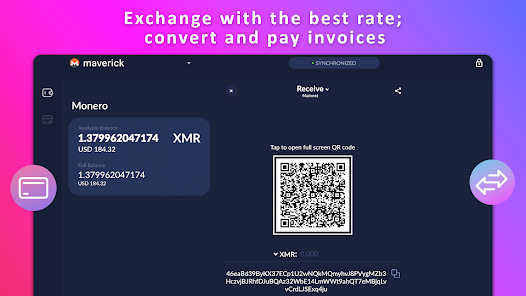
From single-coin wallets to multi-currency phones
Early cryptocurrency wallets were often closely tied to one network. That model made technical boundaries easier to understand: a Bitcoin wallet managed Bitcoin keys and transaction data, while a Litecoin wallet served Litecoin. As mobile use expanded, users reasonably wanted fewer applications, fewer recovery phrases to protect, and a single place to monitor balances. Multi-currency wallets emerged to meet that demand.
The historical shift was not simply about adding more coin icons. Each supported network brings its own address formats, transaction rules, fee markets, confirmation behavior, and synchronization requirements. Litecoin and Bitcoin share important design ancestry, including transparent public ledgers and a transaction model based on spendable outputs. Monero is different in a more fundamental way. Its privacy architecture obscures important transaction relationships, which means a Monero wallet must manage privacy-related data and scanning behavior that cannot be treated as a cosmetic variation of a Bitcoin wallet.
This is why a mobile crypto wallet should be understood as an operating layer rather than a vault in the simple physical sense. The private keys authorize spending, but the application also creates addresses, selects funds, estimates fees, displays confirmations, communicates with network infrastructure, and records transaction history. A weakness or misleading assumption in any one of those layers can affect the user’s practical security even if the cryptography itself remains sound.
The case for one wallet—and the cost of simplification
For the hypothetical user, a unified wallet has real advantages. One carefully stored recovery phrase can be easier to manage than several, and a consistent backup routine may reduce the chance that an account is forgotten. A mobile interface can also make small payments more usable, particularly when the alternative is maintaining separate applications with different backup procedures.
But one recovery phrase does not mean one risk profile. If the phone is unlocked, infected, lost, or backed up carelessly, multiple assets may be exposed at once. The convenience benefit therefore creates concentration risk: fewer interfaces to learn, but potentially more value and more transaction history gathered behind one point of failure. A user who treats a mobile wallet as a spending tool rather than a complete replacement for offline or hardware protection can limit that risk by keeping only a working balance on the device.
There is another subtle trade-off. A wallet can simplify the user experience while relying on external infrastructure to obtain balances and transaction data. That infrastructure may be useful, but it can also learn network-related information such as addresses, timing, or device requests, depending on the design and configuration. Privacy is not only a property of the blockchain. It is also a property of how the wallet queries the blockchain.
Readers evaluating a privacy-oriented application may find it useful to review the cake wallet download information alongside the app’s current permissions, backup process, supported networks, and connection model. The important lesson is not that one application automatically solves every privacy problem. It is that software choice should be examined as a system: keys, network communication, transaction construction, and user behavior all contribute to the outcome.
Why Litecoin and Bitcoin are not interchangeable in practice
A Litecoin wallet and a Bitcoin wallet may look nearly identical on a phone, but their economic environments are separate. The assets have different network conditions, market liquidity, fee behavior, and merchant acceptance. A wallet that displays a balance in dollars can make them feel like interchangeable accounts, yet a conversion shown on screen is only an estimate based on changing market prices. It does not eliminate volatility or guarantee that a recipient will accept the asset.
Both networks use transparent ledgers, so transaction amounts and movement patterns can be analyzed through public blockchain data. This does not mean that every user is automatically identified, but it does mean that address reuse, exchange records, merchant data, and timing can connect activity to a real person. A fresh address can improve basic privacy hygiene, but it is not a magic cloak. Once information enters a regulated exchange, payment processor, or identifiable service, blockchain privacy measures may offer only limited protection.
Litecoin can still be useful as a separate payment network, particularly when its transaction cost or confirmation experience suits a given use case. The decision should be practical rather than ideological: examine the recipient’s required asset, the network fee, the expected confirmation policy, and the consequences of sending on the wrong chain. A mobile wallet helps with the mechanics, but it cannot reverse every human error. Test transactions and careful address verification remain valuable, especially for unfamiliar destinations.
Why a Monero wallet demands a different mental model
Monero is often grouped with other coins under the label “private cryptocurrency,” but the wallet experience is distinctive because privacy is built into the transaction system rather than added merely through optional address management. A Monero wallet must scan relevant blockchain information to identify incoming funds, maintain appropriate private data, and construct transactions using the network’s privacy mechanisms. Synchronization can therefore feel different from opening a transparent-chain wallet and immediately querying a small balance record.
The key conceptual distinction is between hiding a balance on the screen and reducing public linkability on the network. A privacy-focused Monero wallet can make transaction relationships harder to infer, but it cannot protect a user who voluntarily identifies a payment, shares a screenshot, loses control of the recovery material, or uses an unsafe device. Privacy also has operational costs. More private transaction construction and scanning can require additional device resources, patience during synchronization, or trust decisions about remote infrastructure.
Remote nodes illustrate the boundary clearly. They can make a mobile wallet faster to start because the phone does not need to process the entire network history locally. However, the user is then depending on a service outside the phone for some blockchain data. A local node can reduce that dependency but may be inconvenient on a mobile device. Neither option should be described as universally superior: the right choice depends on the user’s threat model, technical ability, available storage, connection quality, and need for privacy.
This leads to a useful framework for comparing a Monero wallet with a general-purpose multi-currency wallet. Ask four questions. Who controls the keys? Who can observe network queries? How does the application verify incoming and outgoing transactions? What happens if the phone disappears tomorrow? These questions are more informative than counting supported coins or relying on a privacy badge in an app listing.
Security habits that matter more than the coin list
For a mobile wallet in the United States, basic operational discipline often determines the result. Download software from a source you can independently verify, keep the operating system updated, protect the phone with a strong passcode, and avoid entering a recovery phrase into websites, messages, or support chats. A wallet provider should never need that phrase to “restore,” “validate,” or “unlock” funds.
Write the recovery phrase down using a method that survives loss of the phone and ordinary household accidents. Digital screenshots and cloud notes are convenient but can create additional exposure. Consider whether the amount held on the phone justifies a separate long-term storage method. The answer is not a fixed dollar threshold; it depends on how damaging loss would be and how confidently the owner can recover the wallet.
Before sending, verify the asset and network, inspect the destination, and understand whether the transaction is reversible. Cryptocurrency transfers generally do not work like credit-card chargebacks. A polished interface may reduce mistakes, but it cannot provide a universal safety net for a wrong address, a malicious copy-and-paste replacement, or a fraudulent recipient.
What to watch as mobile wallets evolve
The next meaningful improvements are likely to be less visible than another row of supported tokens. Watch how wallets explain network connections, display privacy consequences, handle backups, and separate spending balances from long-term holdings. Better software should make important trade-offs legible rather than hiding them behind a single “secure” label.
If mobile wallets increasingly support privacy-sensitive assets, users will also need clearer controls over synchronization and data exposure. A plausible positive scenario is that applications offer understandable choices between convenience and stronger verification, allowing people to select a remote service for routine use while providing a path toward greater self-sovereignty. That outcome is not guaranteed. It depends on engineering quality, reliable infrastructure, transparent software practices, and users who understand what each setting changes.
The durable takeaway is simple but easy to miss: a Litecoin wallet, Bitcoin wallet, and Monero wallet can share a home screen without sharing the same privacy model. Choose a mobile crypto wallet by matching its architecture to the job. Use convenience for controlled spending, treat recovery as a separate security project, and judge privacy by information flows—not by branding alone.
FAQ: choosing a mobile wallet for Litecoin, Bitcoin, and Monero
Is a multi-currency wallet automatically less secure?
No. Supporting several assets does not by itself determine security. The important issues are key control, software integrity, backup design, device security, and how the wallet connects to network infrastructure. However, a multi-currency wallet can concentrate risk because one compromised phone or exposed recovery phrase may affect several assets at once.
Does a Monero wallet make every payment completely anonymous?
No. Monero’s design can provide stronger transaction privacy than transparent ledgers under appropriate conditions, but the user can still reveal identity through exchanges, merchants, communications, device compromise, or careless disclosure. Privacy is a system property involving both the protocol and the surrounding behavior.
Should a mobile wallet hold long-term savings?
It can, but a phone is usually best treated as one component of a broader custody plan. Keep only an amount appropriate for the device’s security and your ability to recover it. For larger or long-term holdings, consider whether stronger isolation and a tested recovery process are warranted.